Since the first industrial revolution, the weaving industry has steadily pushed toward greater productivity, precision, and fabric quality. From stronger yarns to advanced automation and digital monitoring, weaving machines today are fully prepared for the era of Industry 4.0. Yet despite these advances, two stubborn sources of long‑term downtime have remained largely untouched: the tying‑in and the drawing‑in process.
Short-term weaving stops have been minimized through decades of innovation. But tying-in, the essential step of connecting warp ends from a depleted beam to a full one, still forces mills to halt production for hours at a time. For high‑speed weaving operations, those hours translate directly into lost efficiency, lost output, and lost competitive advantage.
A Problem Hiding in Plain Sight
Professors Abdel‑Fattah Seyam and William Oxenham of NC State’s Wilson College of Textiles have spent their careers studying yarn behavior, fabric formation, and machine interactions. They knew the tying‑in bottleneck well and its cost.
Early studies revealed that tying‑in 3,000 to 6,000 warp ends could stop a weaving machine for three to six hours. In an industry where every minute counts, this was a glaring inefficiency waiting for a breakthrough.
And the professors had one.
Their patented non‑stop tying‑in process (US 10,982,357 B2) promised a 4–6% increase in weaving efficiency, a gain larger than the combined impact of all recent innovations targeting short-term stops. With support from the Walmart Manufacturing U.S. Innovation Fund, they began turning their concept into reality.
From Concept to Prototype: A Carolinas Collaboration
Initial testing at the Wilson College of Textiles Weaving Lab proved the concept using sample warping and weaving machines. But to validate the process at scale, the team needed two things:
- A full‑size accumulator built to precise specifications
- A manufacturing partner capable of engineering custom equipment with uncompromising quality
They found both in the Carolinas.
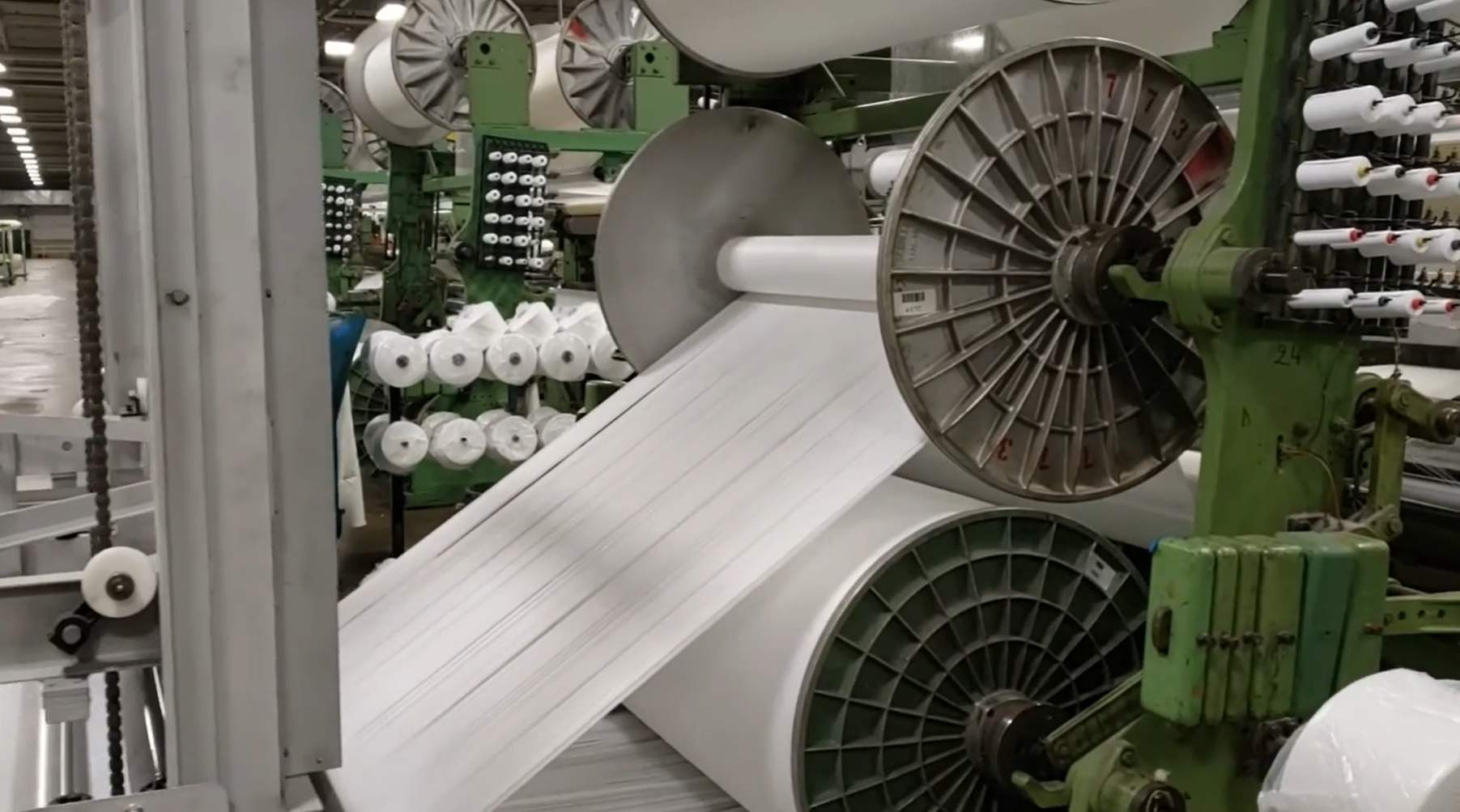
P&A Industrial Fabrications in Roxboro, NC, offered its plant for full‑scale trials, an ideal environment, given its demanding velvet roller fabrics that require three warp beams.
But the true turning point came when the team connected with Menzel USA, the Spartanburg, South Carolina–based division of Germany’s Menzel LP.
Where Menzel Steps In: Engineering the Missing Piece
Menzel LP has been a global leader in web‑handling and processing equipment since the 1960s. Their reputation for custom‑engineered solutions made them the perfect partner to bring the professors’ accumulator design to life.
This is precisely where Menzel excels, transforming complex, one‑of‑a‑kind concepts into robust, industrial‑grade machinery.
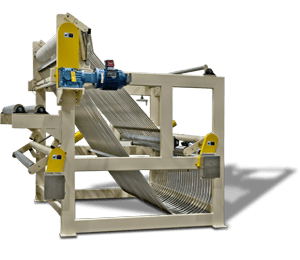
Menzel engineered the full‑scale accumulator prototype required to test the non‑stop tying‑in process under real production conditions. Their expertise in tension control, precision winding, and web‑handling mechanics positioned them uniquely to tackle the project’s biggest challenge: maintaining consistent warp tension when the accumulator is removed after tying‑in.
Warp tension is the heartbeat of weaving. Any fluctuation can compromise fabric quality or disrupt the process entirely. Ensuring stable tension during accumulator removal is essential — and solving it requires the kind of engineering depth Menzel is known for.
Trials, Challenges, and Forward Momentum
The COVID‑19 pandemic slowed progress, but the collaboration persisted. Recent trials at P&A Industrial Fabrications validated the process while revealing opportunities to refine the accumulator’s tension‑control capabilities.
Menzel worked with the research team to modify the prototype and finalize a production‑ready accumulator design with warp tension control as the top priority.
This is the kind of innovation that can reshape weaving efficiency across the industry and Menzel is helping make it possible.
Investing in the Future Workforce
Students and postdoctoral researchers have been deeply involved throughout the project, gaining hands‑on experience with a real‑world innovation that addresses a long‑standing industry challenge. Their participation ensures that the next generation of textile engineers enters the field with both technical insight and practical problem‑solving experience.
Menzel: Engineering the Future of Web Handling
As the weaving industry pushes toward higher efficiency, lower downtime, and smarter automation, partnerships like this one show what’s possible when academic innovation meets world‑class engineering.
Menzel LP has been pioneering web‑handling technology for more than half a century. Today, we continue to build the custom systems that move industries forward.
If your operation is ready for the next leap in efficiency, reliability, and performance, we’re ready to build it with you.
Contact Menzel LP today and let’s engineer the systems that will carry your operation into the future.
For more than 65 years, Menzel LP has led the industry with innovative, high‑quality, customer‑focused engineering. From our groundbreaking A‑frame winding system of the 1960s to today’s advanced web‑handling solutions, we remain committed to technical excellence, collaborative problem‑solving, and delivering customized equipment that enhances manufacturing efficiency worldwide.